Prism Geo · city intelligence · pilot
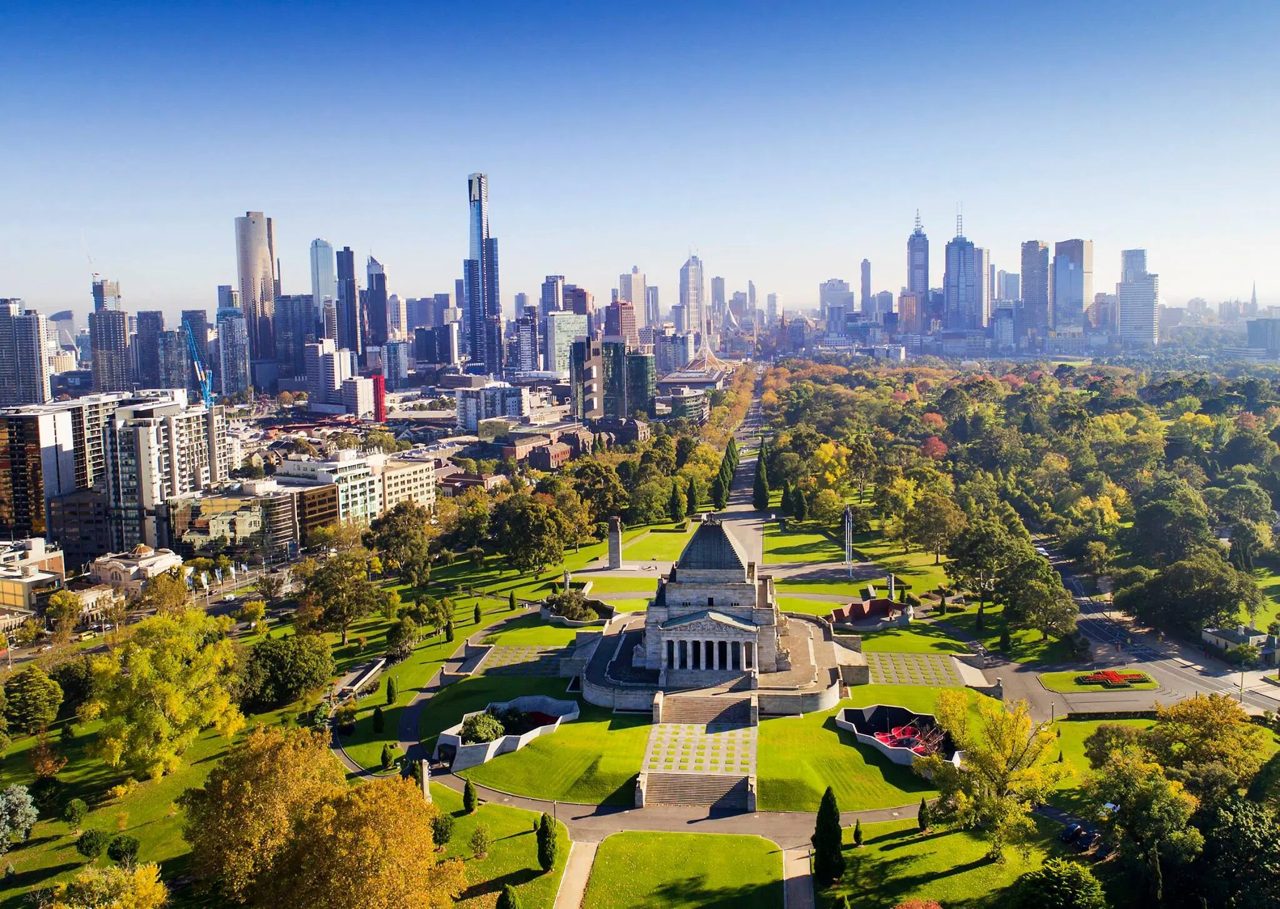
Melbourne · image via Wikimedia Commons
Prism Geo · Australia · Victoria · Melbourne

Melbourne

Victoria, Australia · updated 2026-08-07

Melbourne is a deep, knowledge-heavy city with real commercial range: technology leads, universities generate substantial research, startups keep forming, and finance remains a major employer. But the civic mood has darkened as violent-crime coverage rises, while the registered manufacturing base is thinner than its industrial visibility suggests. It feels capable and connected, yet increasingly preoccupied with safety and the strain of growth.

Melbourne · image via Wikimedia Commons
news reported (civic)
20,112
companies + mapped places
17,351 + 121
research works (est.)
≈265,097
govt money announcements
600
The city at a glance
economic fabric

What is Melbourne made of?

💻 Technology
10/10
🏟 Sports
9/10
🛍 Retail
9/10
🏥 Healthcare
9/10
🏭 Manufacturing
9/10
🎓 Education
8/10
🌱 Sustainability
8/10
🛕 Religion & tourism
8/10
🚛 Logistics
8/10
🌾 Agriculture
6/10

news coverage + 3×registered companies + 2×mapped places, log-scaled vs strongest sector

momentum

What the city turned toward · Jan–Apr 2026

Each topic's share of news attention, January–April 2026 against September–December 2025 — news ingestion paused in May, so this is the latest complete window.

Public Safety

11 → 49 news reports
▲247%

Corruption

10 → 29 news reports
▲126%

Infrastructure & housing

21 → 5 news reports
▼81%

Protest

52 → 16 news reports
▼76%

Legal Judicial

30 → 16 news reports
▼58%

Healthcare

25 → 14 news reports
▼56%

Governance

41 → 30 news reports
▼43%

Accidents

145 → 135 news reports
▼27%

Crime

468 → 732 news reports
▲22%

Missing Persons

12 → 14 news reports
▼9%

a rising share means the city's attention is turning toward it — not necessarily more incidents

top city themes

What Melbourne's news is about

Themes across the city's entire news coverage — ≈212.3K located reports — with each theme's momentum, its most specific keywords, and how the coverage feels. A CRITICAL badge means most of that theme's coverage is extremely negative.

Sports

▲97.5% growing
Test Cricket · Test Innings · Us Open (tennis) · 5-day Cricket
59% positive coverage

Business

▲52.6% growing
Absolute Auctions · Auction Financing · Retail Property Development · Casino Law
82% positive coverage

Football

▲74.2% growing
Afl Sydney · Adelaide Crows · Collingwood Magpies · Afl Queensland
50% positive coverage

Crime

▲53.5% growing
Truck Accident · Murder Investigations · Public Assault · Sexual Assault
100% negative coverage

Politics

▲5.6% growing
Protest Containment · Public Order Policing · Solidarity Protests · Street Protests
88% negative coverage

Technology

▲2.6% growing
Additive Manufacturing System · Global Tournaments · Motorsport Analytics · Motorsport R&d
90% positive coverage

Health

▲6.2% growing
Outbreak Surveillance · Vaccine Candidates · Vaccine Trials · Epidemic Investigation
81% negative coverage

Entertainment

▲69.7% growing
Horse Race Betting Guides · Alternative Rock Concerts · Rock Concerts · World Cinema Festival
80% positive coverage

Real Estate

▼3.3% declining
Absolute Auctions · Auction Financing · Distressed Auctions · Auction Bidding
83% positive coverage

momentum window: Jan–Apr 2026 vs Sep–Dec 2025 · sentiment is a property of the news coverage, not a city rating

city signals

The character of Melbourne

  • Technology-led economy— Technology leads company, street-business and sector evidence.
  • Research-heavy city— Monash and Melbourne universities dominate local research output.
  • Finance employer heft— ANZ and National Australia Bank rank among the biggest employers.
  • Sporting attention magnet— Sports carries nearly as much sector strength as technology.
  • Persistent startup churn— Thousands of companies formed recently, but closures remain material.
  • Transport-led public agenda— Transport dominates government attention and political travel arguments.
  • Rising safety concern— Crime and violence are taking a sharply bigger news share.
  • Retail and visitor pull— Retail scores strongly while Emirates is adding Melbourne flights.
everyday life

Living in Melbourne means…

  • following safety news closely— Crime rose sharply in recent local coverage.
  • navigating a transport-led growth debate— Transport leads funding themes and freeway politics.
  • living beside major research institutions— Monash, Melbourne, La Trobe, Swinburne and RMIT produce locally.
  • finding work in big services— Technology, finance, retail and healthcare all score strongly.
  • watching startups open and fold— Company formation is high, alongside meaningful shutdowns.
  • seeing outbreak anxiety recede— Most outbreak categories are receding, while asthma stays flat.

read from the news record — not a survey

hidden depth

Things most people don't know

  • Melbourne Sexual Health Centre appears among the city’s research institutions with 150 papers in the partial research view.
  • A state innovation fund put $95 million behind the Jumar Bioincubator.
  • Only 17 papers in the partial city-focused research view cover urban transport and accessibility, despite transport leading government attention.
  • Manufacturing earns 9/10 in the wider sector blend even though just 4% of registered businesses are manufacturing-adjacent.
  • 4043 companies were founded since 2018, yet 12.3% of all tracked companies have shut down.
Safety & civic life
Civic intelligence · Prism engine

Where does Melbourne stand against the developed world?

Six-nation developed-median report card (USA · UK · FR · DE · AU · CA) computed from the same data, like-for-like. ▼ worse than the norm, ▲ better.

Six-nation developed median (USA · UK · France · Germany · Australia · Canada) — ▼ worse than the norm, ▲ better

Enforcement Action
27.5%here
20.3%benchmark
Road-accident Accountability
10.4%here
5.8%benchmark
Cases Concluded
9.3%here
5.5%benchmark
Communal Politics
5.2%here
3.6%benchmark
Corruption Load
2.2%here
1.8%benchmark
Fatality-linked News
15.4%here
15.3%benchmark
Open the full data →

four chapters, plus the politics and money layers

Civic record

What problems are increasing?

crime violence is taking the fastest-growing slice of the city's news (up 11.0 points), with policing law enforcement next (up 1.1). Crime still leads in volume, but its share is shrinking.

Each problem's slice of city news — change in points, 2024–26 vs 2021–23
Crime ViolenceCrime ViolenceCrime Violence: +11.0 points of coverage share+11.0Policing Law EnforcementPolicing Law EnforcementPolicing Law Enforcement: +1.1 points of coverage share+1.1Terrorism ConflictTerrorism ConflictTerrorism Conflict: +0.7 points of coverage share+0.7Accidents Road SafetyAccidents Road SafetyAccidents Road Safety: +0.3 points of coverage share+0.3Governance PolicyGovernance PolicyGovernance Policy: +0.3 points of coverage share+0.3Immigration BorderImmigration BorderImmigration Border: -1.2 points of coverage share-1.2Public SafetyPublic SafetyPublic Safety: -1.9 points of coverage share-1.9Disasters EmergenciesDisasters EmergenciesDisasters Emergencies: -2.5 points of coverage share-2.5Public HealthPublic HealthPublic Health: -4.0 points of coverage share-4.0
Fastest-rising specific problems
sexual assault +2.7 ptsarson +2.5 ptshomicide +1.8 ptswar crime murder +1.3 ptsarson attack +1.3 ptshate crime arson +1.0 ptschild abuse +0.9 ptssports injury +0.9 pts
Summary

Melbourne’s civic conversation has taken a hard turn toward violence. Crime and violence claimed a bigger slice of the city’s news, up 11.0 points; sexual assault rose 2.71 points and arson 2.55 points. This is a concentrated safety warning, not a general rise across every civic problem.

WATCH Watch whether the surge in violent-crime coverage is followed by sustained action from authorities.
Open the full data →

20,112 pieces of news reported

Health

What diseases are rising?

No disease signal is rising in 2024–26 — outbreak coverage is receding. disease outbreak is the most-covered signal.

SignalNews Reported2024–26 Trend
Disease Outbreak248▼ receding
Coronavirus Outbreak90▼ receding
Pandemic Outbreak66▼ receding
Viral Outbreak26▼ receding
Asthma Outbreak25— flat
Outbreak20▼ receding
Covid Outbreak19▼ receding
Public-health coverage by year
2026: 122017202612
Summary

Outbreak attention is easing rather than accelerating. Disease-outbreak coverage leads at 248 and coronavirus at 90, both receding, while asthma remains flat at 25. The broad health signal is calmer, but not uniformly improving.

WATCH Watch asthma coverage, the one outbreak category not clearly receding.
Open the full data →

disease signals drawn from local news coverage

Money & governance
Public money

What projects is my government investing in?

transport leads 600 tracked announcements — development-authority land purchase, Smart City works and national-highway tenders anchor the money trail.

Announcement themes
Largest place-directed announcements
DateThemeLevelAmountWhat
2026-03TransportState / Province$100 MillionThe Victorian state government spent over $100 million to cover revenue shortfalls for the 2024 and…
2022-04Social WelfareLocal$100 MillionThe City of Melbourne's $100 million Melbourne Midweek Money pandemic stimulus meal voucher scheme…
2016-06EnergyLocal$100 MillionAustralian government announced a Sustainable Cities Investment Fund with up to $100 million…
2023-06HealthState / Province$95 MillionA state government innovation fund provided $95 million in support to the Jumar Bioincubator, a…
2022-12Economy IndustryNational$92.5 MillionBrazil's National Development Bank approved two $92.5 million credit lines to Eve Air Mobility for…
2022-10Defense SecurityNational$87.8 MillionThe U.S. Air Force awarded Northrop Grumman a one-year $87.8 million…
Summary

Public money is chiefly shaping mobility and economic capacity. Transport leads with 139 announcements and economy and industry follows with 101; a $95 million innovation fund for Jumar Bioincubator adds a targeted life-sciences bet.

WATCH Watch whether transport spending relieves growth pressure or mainly covers existing gaps.
Open the full data →

amounts are announcement headlines — shown, never summed

Politics

Who runs the political conversation?

4090 statements track Melbourne politics — communal-coded rhetoric runs 5.1% (developed-world median ≈3.65%; a typical Indian city runs ≈11%).

Loudest voices
Stance mix
supports · 1320opposes · 1091condemns · 1014proposes · 522demands · 38defends · 38
Summary

Political conversation is active and somewhat more communally framed than in comparable developed cities. Melbourne appears in 4090 tracked statements; 5.1% carry religious or communal framing, above the developed-world median of 3.65%. Daniel Andrews is the loudest individual voice.

WATCH Watch whether transport capacity keeps crowding out other political priorities.
Open the full data →

from political statements naming the city

Economy & work
Jobs

What companies are hiring?

8207 Avanade Australia Pty Ltd Company leads 27 tracked postings; top advertised role: AWS Engineer - Remote.

Top hiring companies · May–Jul 2026
Hiring volume by month · May–Jul 2026
Summary

The visible hiring market is narrow and consultant-heavy. Of 27 local openings, Avanade has 11, while AIA and Simpro have 3 each. This looks more like a pocket of enterprise implementation work than a balanced citywide labor market.

WATCH Watch whether Allied World’s new office broadens hiring beyond enterprise software specialists.
Open the full data →

27 job postings tagged to the city in May–Jul 2026 (a floor, not a census)

Jobs

What skills are available?

Most-demanded skills: salesforce apex, performance optimization, power platform.

Most-demanded skills
Summary

Employers want enterprise software builders more than generalists. Salesforce Apex appears in 6 openings, performance optimization in 5 and Power Platform in 4, alongside demand for Dynamics, artificial intelligence, Azure and security.

WATCH Watch whether artificial intelligence demand develops into distinct roles rather than remaining an added requirement.
Open the full data →

demand-side signal (what employers ask for), not a resident skill census

Economy

Which industries dominate?

Registered economy: information technology and services, financial services, computer software lead 17,351 tracked companies · biggest tracked employer: Rio Tinto.

Registered companies by industry
Street economy — mapped places
Summary

This is a broad service economy with technology at the front. Technology scores 10/10; sports, retail and healthcare each score 9/10, while information technology and services is the largest registered company group at 1452.

WATCH Watch whether new offices and overseas expansion translate into durable local jobs.
Open the full data →

company registry (startup-skewed) + mapped business places

Economy

Is this city good for manufacturing?

Weak Base (0/4 signals) — each signal below is a live threshold that can fail.

  • 618 of 17351 registered startups/companies (4%) are manufacturing-adjacent
  • infrastructure news share falling (down 0.3 points)
Summary

Industrial visibility exceeds industrial depth. Only 618 registered businesses are manufacturing-adjacent, or 4%, despite manufacturing scoring 9/10 in the broader sector blend. The city attracts industrial attention without showing a comparably broad factory base.

WATCH Watch whether the new building-supply facility in Melbourne’s west becomes part of a broader factory pipeline.
Open the full data →

computed verdict — each signal is a live threshold that can fail

Startups & capital
Startups

Is there VC activity?

1,413 of 17,351 tracked companies have raised outside money — #2 among its peer set.

Funded startups — peer cities
Summary

Venture backing exists at scale but is not the norm. Among 17351 tracked companies, 1413 have ever raised outside money, against Sydney’s funded-startup count of 2302. Melbourne has depth, but much of its business population remains outside venture finance.

WATCH Watch whether more newly formed companies move from unfunded status to outside backing.
Open the full data →

round amounts sparse for tier-3 cities — counts shown, dollar totals withheld

Startups

Is a startup ecosystem forming?

Formation is real — 4043 companies founded since 2018 — but capital progression is weak: deadpool 12.3%, and stages are dominated by Unfunded.

Companies founded by year
2026: 3200820263
Stage distribution
Unfunded · 7322Deadpooled · 2139Acquired · 674Funding Raised · 566Public · 284Seed · 229
Summary

Company formation is lively, but survival is the harder story. Some 4043 companies were founded since 2018, while 12.3% of all tracked companies have shut down. Most businesses remain unfunded, making this a large but uneven entrepreneurial field.

WATCH Watch whether recent founders survive long enough to reduce the city’s persistent company churn.
Open the full data →

gate: ≥150 companies & ≥20 recent founds — passed (17351/4043)

The knowledge engine
Research · Prism stance layer

What research is done IN Melbourne?

Monash University leads ≈265,097 estimated works. 43% of oriented output reads promising/breakthrough — clusters in children's health, mental health, women's health.

Institutions (papers in sample)
Research orientation
Opportunities (promising + breakthrough)
Children's Health · 266Mental Health · 264Women's Health · 216Machine Learning · 212Healthcare · 205Parkes · 198Climate Change · 142
Cautions (cautionary + critical)
Healthcare · 109Women's Health · 104Children's Health · 100Mental Health · 98COVID-19 · 96Climate Change · 91Research · 66
Problems flagged
Healthcare · 330Mental Health · 247Women's Health · 244Children's Health · 213Research · 202COVID-19 · 174Education · 134
Summary

Research production is a defining institutional strength. In this partial view, local institutions produced 37871 papers; Monash accounts for 12966 and The University of Melbourne 10533. Children’s health, mental health, women’s health and machine learning stand out as opportunity areas.

WATCH Watch whether promising health and machine-learning work translates into stronger institutions and companies.
Open the full data →

figures marked ≈ are scaled estimates from a partial sample · Prism stance layer over 2017+ papers

Research · Prism stance layer

What research is done FOR Melbourne?

Narrower but distinct: 4171 title-matched works study Melbourne itself — led by australian history and society, new zealand economic and social studies, australian indigenous culture and history.

Top topics in city-focused research
Works about the city by year
2026: 102000202610
Summary

Research about Melbourne is more historical and social than operational. The city attracts 4171 papers, led by Australian History and Society at 75; urban transport and accessibility has just 17, despite mobility dominating public attention.

WATCH Watch whether housing, transport and migration become larger parts of the city’s research agenda.
Open the full data →

papers whose title or entities mention Melbourne (any author location) · partial sample · distinct from research done at the city's institutions

The pulse
News pulse

What is the news saying?

News attention is 42% negative-toned (typical for city civic coverage) — the volume trend tracks total attention on Melbourne.

Monthly news-feature volume
2026-05-01: 312023-012026-0531
Summary

The mood is uneasy and becoming more safety-focused. Negative coverage stands at 42%; public-safety attention surged 247% and crime rose 22% in the latest period. At the same time, protest, healthcare and infrastructure attention fell sharply.

WATCH Watch whether the safety surge persists as attention to other civic pressures recedes.
Open the full data →

from location-tagged news · sentiment skew is a property of news, not the city

Need to go deeper than a city?

Fliar Prism answers any market, company or research question with the same depth — real-time, across every industry.

Explore Fliar Prism →