Prism Geo · city intelligence · pilot
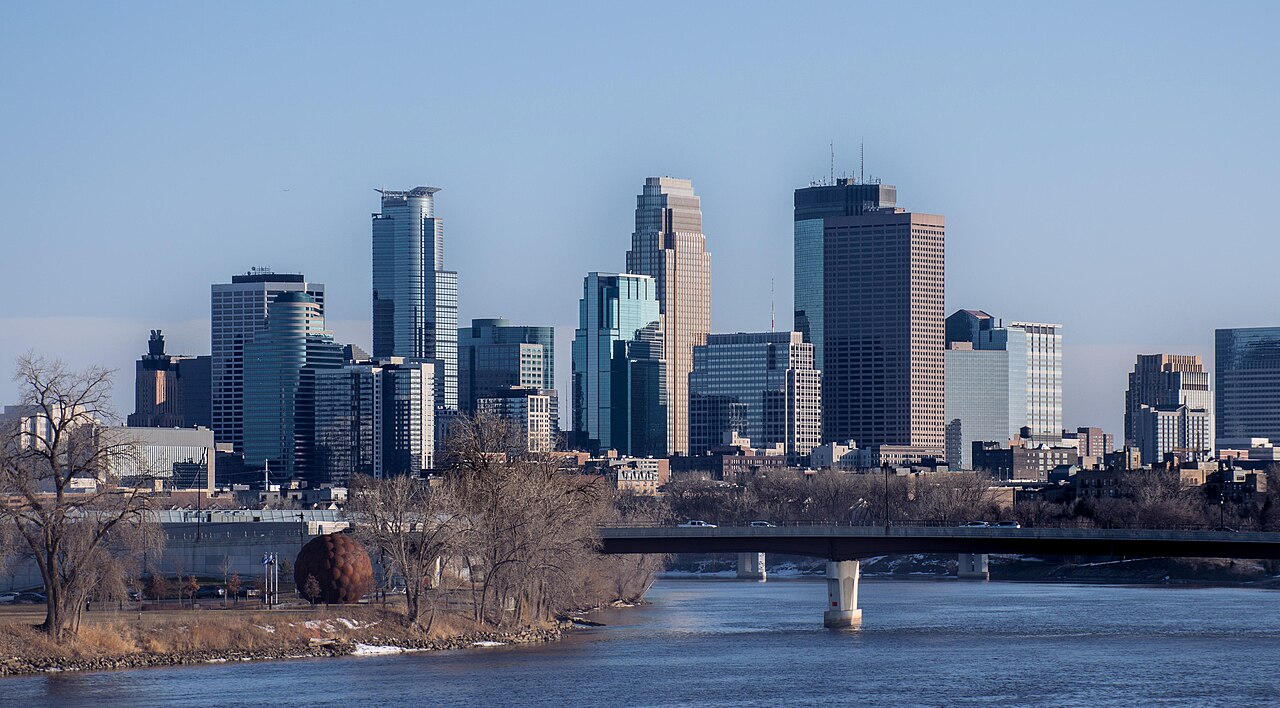
Minneapolis · image via Wikimedia Commons
Prism Geo · United States · Minnesota · Minneapolis

Minneapolis

Minnesota, United States · updated 2026-08-06

Minneapolis has deep corporate and university roots but a bruised civic mood. Technology, healthcare, retail and research provide economic ballast, while startups keep forming and major employers anchor hiring. Yet negative news dominates as protests, immigration enforcement and policing return to view. Employers still prize practical office competence more than advanced technology skills, and government money reveals a city balancing housing needs with defense work.

Minneapolis · image via Wikimedia Commons
news reported (civic)
42,028
companies + mapped places
7,218 + 259
research works (est.)
≈91,105
govt money announcements
208
The city at a glance
economic fabric

What is Minneapolis made of?

💻 Technology
10/10
🏥 Healthcare
10/10
🛍 Retail
10/10
🏭 Manufacturing
10/10
🏟 Sports
10/10
🎓 Education
8/10
🌱 Sustainability
8/10
🚛 Logistics
8/10
🛕 Religion & tourism
8/10
🌾 Agriculture
6/10

news coverage + 3×registered companies + 2×mapped places, log-scaled vs strongest sector

momentum

What the city turned toward · Jan–Apr 2026

Each topic's share of news attention, January–April 2026 against September–December 2025 — news ingestion paused in May, so this is the latest complete window.

Protest

11 → 974 news reports
▲491%

Policing Law Enforcement

38 → 2550 news reports
▲348%

Legal Judicial

26 → 30 news reports
▼92%

Elections Politics

8 → 9 news reports
▼92%

Corruption

85 → 142 news reports
▼89%

Accidents

17 → 71 news reports
▼72%

Human Rights Social

6 → 32 news reports
▼64%

Crime

377 → 4502 news reports
▼20%

Immigration Border

148 → 2461 news reports
▲11%

Governance

22 → 325 news reports
▼1%

a rising share means the city's attention is turning toward it — not necessarily more incidents

top city themes

What Minneapolis's news is about

Themes across the city's entire news coverage — ≈150.6K located reports — with each theme's momentum, its most specific keywords, and how the coverage feels. A CRITICAL badge means most of that theme's coverage is extremely negative.

Politics

▲879.5% growing
Police Misconduct · Officer Misconduct · Police Violence · Police Brutality
96% negative coverage

Crime

▲941.2% growing
Police Misconduct · Multiple Victim Shooting · Mass Shooting · Officer Misconduct
100% negative coverage

Sports

▼22.2% declining
Mlb Starting Pitchers · Mlb Player Performance · College Playoffs · Mlb Team Standings
65% positive coverage

Business

▲37.2% growing
Quarterly Results · Earnings Report · Ceo Change · Sustainability Commitment
83% positive coverage

Social Issues

steady coverage
Street Protests · Neighborhood Violence · Police Violence · Street Violence
97% negative coverage

Football

▼55.6% declining
College Playoffs · Nfl Player Stats · Campus Sports · College Football Finals
54% positive coverage

Technology

▲5.6% growing
3d Printer Software · Cable Vod Delivery · Waste Reduction Campaigns · 5g Latency
90% positive coverage

Finance

▲28.6% growing
Core Inflation Rate · Inflation Outlook · Job Creation Rates · Monetary Stance Shift
85% positive coverage

Health

▲91.7% growing
Drug Overdose · Sars-cov-2 Vaccination · Covid-19 Vaccine Development · Vaccination Campaigns
71% negative coverage

momentum window: Jan–Apr 2026 vs Sep–Dec 2025 · sentiment is a property of the news coverage, not a city rating

city signals

The character of Minneapolis

  • Corporate headquarters muscle— Target, UnitedHealth, Cargill and US Bank anchor a giant employer base
  • Health-tech research engine— University of Minnesota leads research; healthcare and technology share top strength
  • Agency and software cluster— Marketing agencies and software companies lead mapped businesses and company counts
  • Active startup conveyor— 750 companies formed since 2018, with a modest shutdown share
  • Funding depth, uneven reach— 781 companies raised outside money while unfunded status remains dominant
  • Five-way sector breadth— Technology, healthcare, retail, manufacturing and sports share top blended strength
  • Civic attention under strain— Protests, policing and immigration now command sharply more attention
  • Federal spending crossroads— Housing, defense, transport and welfare attract major government money
everyday life

Living in Minneapolis means…

  • working among giant employers— Target, UnitedHealth, Cargill and US Bank shape the jobs landscape
  • following tense civic news— Most coverage is negative; protests and policing recently surged
  • finding serious university medicine— University of Minnesota and major health institutions lead local research
  • needing everyday office fluency— Excel and Microsoft tools outrank AI and Python in job ads
  • seeing agencies on the street— Marketing agencies lead mapped businesses, with software firms close behind
  • watching housing policy closely— Affordable housing drew the largest city-directed funding announcement

read from the news record — not a survey

hidden depth

Things most people don't know

  • The Minneapolis Institute of Arts appears among local research producers with 99 papers.
  • The Federal Reserve Bank of Minneapolis appears among local research producers with 87 papers.
  • Chinese history and philosophy is tied with urban neighborhood segregation as the most frequent listed topic in research about Minneapolis.
  • Minneapolis-based Jellycat signed a five-year lease spanning 4,319 square feet at 475 Fifth Avenue.
  • City-directed federal awards include a $92.7 million body-armor contract for Ceradyne and a $71 million nuclear-deterrent contract for BAE Systems.
Safety & civic life
Civic intelligence · Prism engine

Where does Minneapolis stand against the developed world?

Six-nation developed-median report card (USA · UK · FR · DE · AU · CA) computed from the same data, like-for-like. ▼ worse than the norm, ▲ better.

Six-nation developed median (USA · UK · France · Germany · Australia · Canada) — ▼ worse than the norm, ▲ better

Fatality-linked News
28.5%here
15.3%benchmark
Enforcement Action
22.3%here
20.3%benchmark
Cases Concluded
7.2%here
5.5%benchmark
Corruption Load
1.2%here
1.8%benchmark
Communal Politics
4.1%here
3.6%benchmark
Road-accident Accountability
6.1%here
5.8%benchmark
Open the full data →

four chapters, plus the politics and money layers

Civic record

What problems are increasing?

immigration border is taking the fastest-growing slice of the city's news (up 15.7 points), with protest civil unrest next (up 3.8). Crime still leads in volume, but its share is shrinking.

Each problem's slice of city news — change in points, 2024–26 vs 2021–23
Immigration BorderImmigration BorderImmigration Border: +15.7 points of coverage share+15.7Protest Civil UnrestProtest Civil UnrestProtest Civil Unrest: +3.8 points of coverage share+3.8Corruption FraudCorruption FraudCorruption Fraud: +1.8 points of coverage share+1.8Human Rights SocialHuman Rights SocialHuman Rights Social: +0.2 points of coverage share+0.2Terrorism ConflictTerrorism ConflictTerrorism Conflict: +0.1 points of coverage share+0.1Governance PolicyGovernance PolicyGovernance Policy: -0.9 points of coverage share-0.9Crime ViolenceCrime ViolenceCrime Violence: -2.3 points of coverage share-2.3Policing Law EnforcementPolicing Law EnforcementPolicing Law Enforcement: -5.3 points of coverage share-5.3Legal JudicialLegal JudicialLegal Judicial: -10.6 points of coverage share-10.6
Fastest-rising specific problems
shooting +8.7 ptsshooting +2.6 ptsimmigration protest +1.9 ptsassault +1.8 ptsfatal shooting +1.4 ptsfederal enforcement shooting +1.0 ptsofficer shooting +0.9 ptsimmigration enforcement +0.8 pts
Summary

The civic agenda is shifting toward immigration, protests and shootings. Immigration took a bigger slice of the city's news (up 15.7 points), protests rose 3.8 points, and a fatal shooting tied to immigration enforcement was recorded with 6 deaths, even as broader crime and policing coverage declined over the longer comparison.

WATCH Watch whether immigration enforcement and protests cool without shootings becoming the city's defining safety story.
Open the full data →

42,028 pieces of news reported

Health

What diseases are rising?

Rising: viral outbreak.

SignalNews Reported2024–26 Trend
Disease Outbreak47▼ receding
Pandemic Outbreak11— flat
Viral Outbreak6▲ rising
Public-health coverage by year
2026: 5201720265
Summary

The health picture is mostly easing, but viral risk has not disappeared. Disease outbreaks lead with 47 mentions and are receding; pandemic outbreaks are flat at 11, while viral outbreaks are rising at 6.

WATCH Watch whether rising viral-outbreak attention develops into a broader public-health concern.
Open the full data →

disease signals drawn from local news coverage

Money & governance
Public money

What projects is my government investing in?

defense security leads 208 tracked announcements — development-authority land purchase, Smart City works and national-highway tenders anchor the money trail.

Announcement themes
Largest place-directed announcements
DateThemeLevelAmountWhat
2024-06Urban HousingNational$100 MillionBiden administration announced $100 million in federal funding over three years to support…
2025-09Economy IndustryNational$94.3 MillionThe Neighborhood Development Center of Minnesota distributed $94.3 million in Promise Act grants to
2016-05Defense SecurityNational$92.7 MillionThe U.S. Defense Logistics Agency awarded a $92.7 million contract to Ceradyne Inc. for 177,000…
2026-05HealthNational$91 MillionThe U.S. federal government deferred $91 million in Medicaid funding to Minnesota due to systemic…
2016-05Defense SecurityNational$72 MillionThe U.S. Navy awarded BAE Systems a $72 million contract to manufacture and deliver propulsors and…
2023-01Defense SecurityNational$71 MillionBAE Systems won a $71 million competitive contract to manufacture and deliver Columbia-class…
Summary

Government money is split between housing needs and defense work. Affordable housing received the largest listed commitment at $100 million, while Ceradyne's body-armor contract brought $92.7 million and BAE Systems later won $71 million for nuclear-deterrent work.

WATCH Watch whether housing support becomes durable local construction and whether deferred Medicaid money constrains health services.
Open the full data →

amounts are announcement headlines — shown, never summed

Politics

Who runs the political conversation?

8718 statements track Minneapolis politics — communal-coded rhetoric runs 3.4% (developed-world median ≈3.65%; a typical Indian city runs ≈11%).

Loudest voices
Stance mix
opposes · 2694condemns · 2589supports · 2359proposes · 593demands · 170accuses · 101
Summary

Political conversation is relatively secular in framing: religious or communal language appears in 3.4%, just below the developed-world median of 3.65%. Donald Trump is the loudest named voice with 1416 mentions, while Jacob Frey appears under two name variants.

WATCH Watch whether local voices regain space from national figures as civic tensions evolve.
Open the full data →

from political statements naming the city

Economy & work
Jobs

What companies are hiring?

Deloitte leads 5,567 tracked postings; top advertised role: Hospice CNA.

Top hiring companies · May–Jul 2026
Hiring volume by month · May–Jul 2026
Summary

Hiring is led by professional services, banking, contracting and public education. Deloitte advertises 78 roles, Minnesota Jobs 74 and U.S. Bank 58; Minneapolis Public Schools also appears among the leading recruiters.

WATCH Watch whether banks and consultancies keep leading as technology hiring broadens.
Open the full data →

5567 job postings tagged to the city in May–Jul 2026 (a floor, not a census)

Jobs

What skills are available?

Most-demanded skills: excel, microsoft office, word.

Most-demanded skills
Summary

Practical office competence beats fashionable technology in current demand. Excel appears in 241 ads, AI in 55 and Python in 47, while project management and Salesforce reinforce a business-operations tilt.

WATCH Watch whether AI demand begins pulling Python and technical skills closer to office software.
Open the full data →

demand-side signal (what employers ask for), not a resident skill census

Economy

Which industries dominate?

Registered economy: marketing and advertising, computer software, information technology and services lead 7,218 tracked companies · biggest tracked employer: Target.

Registered companies by industry
Street economy — mapped places
Summary

The economy is broad, with marketing, software, technology services, real estate and healthcare prominent among companies. Target, UnitedHealth Group, Cargill and US Bank provide major corporate anchors. Sutter Health's planned acquisition of Minneapolis-based Allina Health shows that healthcare remains strategically important.

WATCH Watch whether healthcare consolidation strengthens local decision-making or shifts it elsewhere.
Open the full data →

company registry (startup-skewed) + mapped business places

Economy

Is this city good for manufacturing?

Weak Base (0/4 signals) — each signal below is a live threshold that can fail.

  • 0 of 7218 registered startups/companies (0%) are manufacturing-adjacent
  • infrastructure news share falling (down 0.4 points)
Summary

Manufacturing is visible but structurally thin in this evidence. It ranks among the strongest blended sectors in news and business presence, yet the dedicated manufacturing test found no manufacturing-adjacent registered companies and called the base weak; infrastructure attention is also falling.

WATCH Watch whether defense contracts and logistics acquisitions translate into locally rooted production capacity.
Open the full data →

computed verdict — each signal is a live threshold that can fail

Startups & capital
Startups

Is there VC activity?

781 of 7,218 tracked companies have raised outside money — #1 among its peer set.

Funded startups — peer cities
Summary

Minneapolis has a serious funding track record, with 781 tracked companies having raised outside money, ahead of Indianapolis at 530 and Kansas City at 328 in the comparison set. Yet unfunded companies remain dominant, so capital depth is real without being universal.

WATCH Watch whether new funding reaches younger companies beyond the city's established corporate networks.
Open the full data →

round amounts sparse for tier-3 cities — counts shown, dollar totals withheld

Startups

Is a startup ecosystem forming?

Formation is real — 750 companies founded since 2018 — but capital progression is weak: deadpool 4.2%, and stages are dominated by Unfunded.

Companies founded by year
2026: 6200820266
Stage distribution
Unfunded · 1592Acquired · 523Deadpooled · 317Funding Raised · 237Private · 184Seed · 144
Summary

The startup pipeline is active: 750 companies were founded since 2018, and 4.2% of all tracked companies have shut down. Marketing, software and technology services provide the surrounding commercial fabric, while acquisitions offer a visible exit route.

WATCH Watch whether recent founders begin raising money instead of remaining concentrated in the unfunded ranks.
Open the full data →

gate: ≥150 companies & ≥20 recent founds — passed (7218/750)

The knowledge engine
Research · Prism stance layer

What research is done IN Minneapolis?

University of Minnesota leads ≈91,105 estimated works. 46% of oriented output reads promising/breakthrough — clusters in children's health, women's health, machine learning.

Institutions (papers in sample)
Research orientation
Opportunities (promising + breakthrough)
Children's Health · 95Women's Health · 88Machine Learning · 76Healthcare · 72Mental Health · 62Neuroscience · 59Breast Cancer · 56
Cautions (cautionary + critical)
Children's Health · 45Women's Health · 34Healthcare · 30Climate Change · 18Patients' Health · 18COVID-19 · 16Research · 16
Problems flagged
Healthcare · 75Children's Health · 67Women's Health · 52COVID-19 · 44Mental Health · 40Public Health · 36Education · 35
Summary

Research is deep and strongly university-led. Local institutions produced 13015 papers in the visible record, with the University of Minnesota responsible for 9818. Children's health, women's health, machine learning, mental health and neuroscience stand out, though health topics also attract caution.

WATCH Watch whether machine learning connects more strongly with the city's health research strengths.
Open the full data →

figures marked ≈ are scaled estimates from a partial sample · Prism stance layer over 2017+ papers

Research · Prism stance layer

What research is done FOR Minneapolis?

Narrower but distinct: 2084 title-matched works study Minneapolis itself — led by chinese history and philosophy, urban, neighborhood, and segregation studies, race, history, and american society.

Top topics in city-focused research
Works about the city by year
2026: 9200020269
Summary

Scholarship about Minneapolis treats it as both an urban laboratory and an unexpectedly global subject. Chinese history and philosophy and urban neighborhood segregation each lead the listed topics at 6 papers; race, history and American society follows at 5, alongside transport accessibility and environmental history.

WATCH Watch for more work connecting segregation, transport access and neighborhood change.
Open the full data →

papers whose title or entities mention Minneapolis (any author location) · partial sample · distinct from research done at the city's institutions

The pulse
News pulse

What is the news saying?

News attention is 59% negative-toned (typical for city civic coverage) — the volume trend tracks total attention on Minneapolis.

Monthly news-feature volume
2026-05-01: 162023-012026-0516
Summary

The news mood is plainly harsh: 59% of coverage reads negative. In the latest window, protest attention rose 491% and policing attention rose 348%, overwhelming quieter declines in legal, election and corruption themes.

WATCH Watch whether the current focus on street conflict fades or hardens into the city's lasting public image.
Open the full data →

from location-tagged news · sentiment skew is a property of news, not the city

Need to go deeper than a city?

Fliar Prism answers any market, company or research question with the same depth — real-time, across every industry.

Explore Fliar Prism →